Selecting the best decking materials for your home is about more than just picking a color from a showroom sample. It’s an investment in your home’s footprint and your family’s quality of life. Whether you are envisioning a space for summer barbecues or a quiet corner for your morning coffee, the foundation you choose today will dictate how much time you spend enjoying your deck—and how much time you spend maintaining it—ten years from now.
We’ve seen how Michigan’s diverse climate—from humid summers to freezing, snowy winters—can put even the toughest surfaces to the test. If you are feeling overwhelmed by the choice between wood, composite, and PVC, you aren’t alone. Here is everything you need to know to find the perfect fit for your outdoor space. Let’s dive in now!
Why Choosing the Best Decking Materials Matters

When planning an outdoor project, the best material isn’t always the most expensive one; it’s the one that aligns with your lifestyle and budget. The right choice directly impacts the structural safety of your deck, its resistance to moisture from the Great Lakes, and your home’s overall resale value. By comparing outdoor materials early in the process, you can avoid the hidden costs of frequent staining, sanding, or premature rot.
It’s also important to consider how each material performs over time. Factors like maintenance requirements, durability in changing weather conditions, and long-term appearance all influence the overall value of your investment. Taking the time to evaluate these elements helps ensure your deck remains safe, attractive, and enjoyable for many years while minimizing unexpected repair or replacement costs.
Common Outdoor Decking Materials Homeowners Consider
When it comes to materials, there is no universal solution. Most modern projects fall into one of three categories, each offering a different balance of upfront cost, durability, and maintenance requirements. Understanding the strengths and limitations of each option helps homeowners make a more informed decision when planning their outdoor living space.
Pressure-Treated Wood Decking
Pressure-treated wood remains a staple for homeowners who love the look and feel of real lumber. It is cost-effective and provides a classic aesthetic that many people find irreplaceable.
- Affordability: This is usually the lowest decking material entry point for a high-quality build.
- Customization: You can stain or paint wood in almost any shade to match your home’s trim.
- Natural Appearance: Many homeowners prefer the authentic texture and warmth of real wood underfoot.
- Availability: Pressure-treated lumber is widely available and easy to source for most deck projects.
- The Trade-off: Wood is a natural product. Without annual cleaning and sealing, it is prone to splintering, warping, and rot, especially in high-moisture environments.
Composite Decking
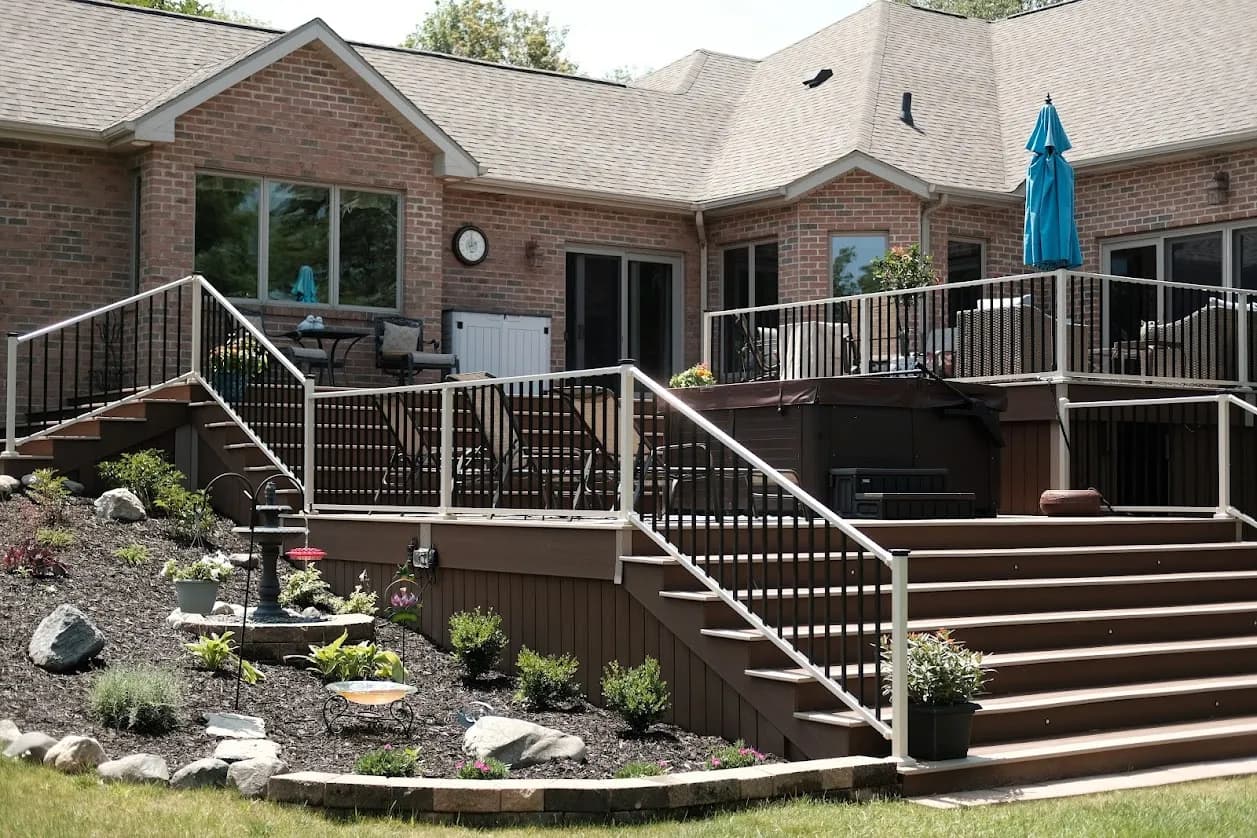
If you want the beauty of wood without the weekend chores, composite decking benefits are difficult to ignore. Made from a blend of recycled wood fibers and durable plastics, composite boards are engineered to look like natural grain while resisting the elements.
- Low Maintenance: Composite boards typically require only occasional cleaning rather than regular staining or sealing.
- Durability: They resist splintering, insect damage, and many of the common problems associated with natural wood.
- Consistent Appearance: Manufactured boards maintain their color and texture more evenly over time.
- Eco-Friendly Options: Many composite products are made with recycled materials, making them a more sustainable choice.
- Balanced Cost: While more expensive than wood upfront, composite can reduce maintenance costs over the life of the deck.
All of these factors come into play when you compare the best decking materials for outdoor living spaces and make a choice about what materials to use in your outdoor home addition.
PVC Decking Boards
Often referred to as plastic decking materials, modern PVC decking boards are the high-end, synthetic cousins of composite. Unlike composite, which contains wood fibers, PVC is made entirely from polymer, creating a highly durable and moisture-resistant decking solution.
- Superior Moisture Resistance: Because PVC contains no organic material, it will not absorb water, warp, or rot.
- Excellent Mold Resistance: This makes it ideal for poolside decks, shaded areas, and humid environments.
- Very Low Maintenance: PVC boards typically require simple cleaning to maintain their appearance.
- Lightweight Construction: Many PVC boards are easier to handle and install than heavier composite materials.
- Long-Term Performance: For homeowners seeking maximum durability and minimal upkeep, PVC decking offers one of the most reliable synthetic decking solutions available.
Each of these decking materials offers unique advantages, and the right choice ultimately depends on your budget, maintenance preferences, and how you plan to use your outdoor space. Taking time to compare these options can help ensure your deck delivers lasting comfort, durability, and value for your home.
Wood Deck vs. Composite: Key Differences

This debate usually comes down to time versus money, as both materials offer distinct advantages depending on how much maintenance you’re willing to handle and how long you want your deck to last.
- Maintenance: A wood deck requires a dedicated weekend of maintenance every 1–2 years, including cleaning, sanding, and resealing to protect against moisture and UV damage. Composite decking, on the other hand, typically only needs an occasional wash with soap and water to remove dirt and debris.
- Longevity: While a well-maintained wood deck can last 15–20 years, exposure to moisture, insects, and sun can shorten its lifespan if upkeep is neglected. Many composite manufacturers offer 25-to-50-year warranties against fading, staining, and structural damage.
- Aesthetics: Wood offers a natural warmth and authentic grain pattern that many homeowners love. Composite decking, however, provides a polished, uniform appearance that maintains its color and texture year after year.
- Cost Considerations: Wood generally has a lower upfront cost, making it appealing for budget-conscious homeowners. Composite materials typically cost more initially but can save money over time by reducing maintenance expenses and replacement needs.
Understanding these differences helps homeowners weigh both short-term budget considerations and long-term value when choosing the right decking material for their outdoor space.
PVC vs. Composite Decking: Which Is Better?
When comparing PVC and composite decking, you are looking at two high-performance, low-maintenance options that address the common problems associated with traditional wood. The main difference lies in the board’s core. Because PVC contains no organic wood fillers, it is lighter and stays cooler in the sun than many composite brands, making it ideal for poolside decks.
However, many homeowners still prefer the benefits of composite decking, which offers a closer match to natural lumber. Because composite uses a blend of recycled wood fibers, it often achieves a more convincing matte finish than the slightly more synthetic sheen sometimes found on PVC.
Both materials offer the lasting beauty homeowners love: they resist fading, scratching, and mold without ever requiring a weekend of sanding or staining. Ultimately, your choice depends on whether you prioritize the total moisture-proofing of PVC or the organic aesthetic of a high-end composite.
Deck Material Comparison: Which Option Is Right for Your Home?
Choosing the right decking material often comes down to balancing cost, durability, and environmental conditions. By evaluating your options through a few key decision points, homeowners can better determine which material offers the best long-term performance for their outdoor space.
- The Initial Budget: Pressure-treated wood is typically the most affordable option upfront, making it attractive for homeowners who want to build a deck without a large initial investment. It provides a classic appearance and solid structural performance when properly maintained.
- The Long-Term Value: Composite decking typically has a higher initial cost, but its minimal maintenance requirements can significantly reduce costs over time. Without the need for regular staining, sealing, or sanding, many homeowners find that composite decking becomes more economical over a 10-year period.
- The Environment: Climate and exposure play a major role in material performance. If your deck will be located in a damp, shaded area or near water features, PVC decking often performs best because it resists moisture, mold, and mildew more effectively than wood or composite materials.
- Maintenance Expectations: Homeowners should also consider how much time they want to spend maintaining their deck. Wood requires routine upkeep, while composite and PVC options are designed to stay attractive with far less effort.
By carefully comparing these factors, homeowners can choose a decking material that not only fits their budget but also supports the durability, safety, and appearance they want for their outdoor living space.
Why Professional Deck Installation Matters

Even the top materials will fail if the structure underneath is flawed. A professional builder ensures that your footings are deep enough to withstand Michigan’s frost-thaw cycle and that your ledger board is correctly flashed to prevent house rot. Beyond safety, professional installation ensures that the boards are spaced perfectly for drainage and expansion, protecting your manufacturer’s warranty and your home’s value.
Selecting the right material is the first step toward your dream outdoor retreat. Whether you prefer the organic warmth of wood or the worry-free longevity of modern synthetics, our team is here to guide you through every choice.
If you’re ready to see samples in person and get an expert opinion on your backyard’s potential, schedule your free remodeling consultation today, and let’s find the best decking materials for your home!
Frequently Asked Questions
1. How do I maintain my deck for longevity?
For wood, you must sweep away debris and apply a UV-protective sealer every 1–2 years. For composite and PVC, maintenance is much simpler: a seasonal wash with a soft-bristle brush and mild soap is usually enough to remove pollen and dirt. Always avoid using metal shovels to clear snow, as they can scratch the surface of any decking material.
2. What is the average cost of deck installation?
Costs vary based on size and complexity, but a general rule of thumb is that wood is the most affordable upfront. The composite deck cost typically ranges from 40% to 60% more than wood for materials, but it pays for itself in about 5–7 years by eliminating the need for professional staining and sealing.
3. Can I install decking structures myself?
While many homeowners handle simple board replacements, a full deck build is a structural project. Professional builders handle the complex math of load-bearing posts, joist spacing (which differs between wood and composite), and the necessary building permits. DIY mistakes in these areas can lead to sagging boards or even structural collapse.
4. Are there eco-friendly decking options available?
Yes! Most composite decking is made from up to 95% recycled materials, including reclaimed wood, sawdust, and plastic grocery bags. Choosing these materials keeps tons of waste out of landfills. Additionally, many wood options are sourced from FSC-certified forests that prioritize sustainable harvesting.
5. How do climate conditions affect decking material choices?
In regions with heavy snow and humidity, moisture resistance is key. Wood requires more frequent sealing in these areas to prevent rot. PVC and composite are excellent for four-season climates because they don’t absorb water, meaning they won’t crack or heave during the winter freeze-thaw cycles common in Michigan.